the lost year
Cry MachoThe lost year is Mike Milo’s name for the destructive period that followed the death of his daughter Laurie, and for the grief that remains after its worst behavior has ended. It begins as a sequence of losses and self-inflicted burdens, but the phrase returns later when Mike fears that his familiar paralysis is starting again. Its eventual closure, during a final visit to Cissy Brewer, does not resolve his loneliness; it marks the end of one period of damage while leaving him uncertain what can carry him into the next day.
Meaning and Beginning
The phrase gives a name to a period Mike had tried to force out of his consciousness. Remembering it, he thinks of it as a terrible year whose costs have not disappeared with time: he is still paying off what he owes, and remorse makes that debt feel heavier. The phrase therefore describes more than a stretch of the past. It joins material consequences to emotional ones, making repayment and regret parts of the same continuing burden.
The period began immediately after Laurie’s death. Mike’s later recollection returns to the rain on the evening he stood at her grave and struck the earth with his feet. In a rage, he blamed the dead child. The scene is disturbing not simply because grief overwhelms him, but because his accusation survives as an inward refrain. When he asks whether, at thirty-eight, he is still saying that it was her fault, the answer is carried by the ache that remains. The lost year’s beginning is thus registered both as an outward act and as a thought he cannot leave behind.
The narrative makes the phrase recur at moments when Mike’s present seems to resemble that earlier collapse. After Rachel Perry’s marriage, he left Donna; he later remembers that separation alongside his visit to Laurie’s grave. Looking back, he wonders whether another lost year is beginning, or whether the loss could become permanent. The question turns the phrase from a retrospective label into a fear about repetition: the past is not safely finished if its emotional pattern can return.
Grief, Risk, and Debt
Mike had not previously been much of a drinker, and he disliked alcohol. Two days after Laurie’s funeral, however, he drank on the night before the Cattlemen’s show. For the first time in five years, he won nothing—not even an exhibition prize—and he suffered a cracked collarbone. Unable to ride for two months, he had little to occupy him and began gambling. The sequence links bereavement to the loss of the work that had structured his life, then to habits that compounded rather than relieved his distress.
Gambling became regular. Mike played poker twice a week at a boardinghouse off the Houston freeway and blackjack on Saturday nights above Ro Duncan’s Sport Goods Shop. He eventually realized that he owed Ro Duncan sixty-one thousand dollars. Mike quit gambling and began paying the debt by installments, but he did not stop drinking. After shows, he went from the stadium to the Red Rio Bar, telling himself that he was there to throw darts. As self-deception grew easier, the lost year became a history of recognizing damage without immediately stopping the behavior that produced it.
That history continues to shape Mike’s practical worries later. He has only a few thousand dollars, expects the money not to last, and is still making payments to Donna. When he thinks of the lost year, he describes himself as continuing to discharge its debt at a high rate of interest. Regret adds a further penalty, while Donna herself remains a source of pain he cannot simply treat as a financial obligation. The phrase gathers these different forms of unfinished business without suggesting that they are interchangeable: money can be repaid in installments, but remorse and attachment do not obey the same schedule.
Recurrence in the Present
When Mike is unable to move after an intimate farewell with Cissy, he recognizes a state resembling the one that followed Laurie’s death: he feels inert and immobilized. The echo makes the lost year seem poised to begin again. Yet Mike rejects the idea that nothing can be learned from experience. His hesitation matters because it interrupts the apparent repetition; he recognizes the pattern, but does not treat its return as inevitable.
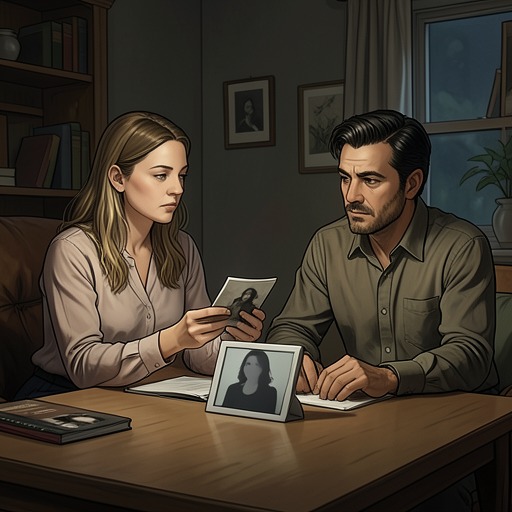
This recognition is set against a narrowing sense of what remains available to him. Donna is going to marry, and he believes he has probably seen her for the last time. He has received only one letter from Rachel and expects no further correspondence. His medals and trophies have been sold, his locker is empty, and he does not expect to return to the arena. He also rules out returning to Laurie’s grave to pound on it. The blank space where he might have put Laurie’s picture gives that absence a quiet, domestic form: he considers retrieving the photograph but leaves the space empty. In this present crisis, the fear of another lost year grows from the disappearance of familiar attachments and activities, not from a single new catastrophe.
Cissy and the End of the Period
Cissy Brewer has already been associated with the end of Mike’s first lost year, although she had been unaware that she was helping him. Later, the thought of her lifts his spirits and gives him a simple task: he buys groceries for her, including eggs, bread, butter, milk, fruit, vegetables, a smoked ham, and the peanut brittle she loves. He understands the visit as a way to do something for someone else, and remembers that Cissy had once helped bring his earlier collapse to an end. The groceries make care concrete at the moment when Mike feels unable to find a larger purpose.
The final visit is painful because Mike knows that when welfare workers take Cissy away, he will never see her again. After their quiet farewell, he returns to the car and cannot make himself leave or cry. He recognizes the resemblance to his earlier immobilization, but then understands the visit as closing the lost year forever. That closure is not a restoration: the same moment brings the thought that nothing remains to carry him over until tomorrow. He has little to return to, and the future offers no clear consolation. The phrase’s final significance lies in this double movement. Cissy’s visit ends the old period of self-destruction, while its ending exposes the loneliness that had been hidden inside it; the past is closed, but the blankness ahead remains.